



Are you working on a project and need to use a Jubilee clip, or wondered what they are and what they are used for?
In this article we will explore the origins of the Jubilee clip, what it is, how it works, the different types and materials available, and look at the best practices for installation, maintenance and safe use.
Keep reading to learn everything you need to know about Jubilee clips…
What is a Jubilee clip?
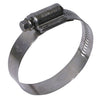
To put it clearly, a Jubilee clip is a worm drive hose clamp: a circular band, usually made of steel, with a screw thread cut into it and a captive screw mechanism that allows the band to be tightened securely around a hose.
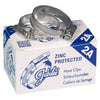
The name “Jubilee” itself is a registered trademark, yet in the UK and Ireland the term has become a generic shorthand for any worm drive hose clip, much like “Hoover” for vacuum cleaners.
The purpose of the Jubilee clip is straightforward, yet vital. By compressing a flexible hose onto a rigid fitting (be it a spigot, tap, barb, or pipe) the clip prevents leaks and detachment under pressure.
Without such a clamp, fluid systems would be prone to failure, risking anything from minor drips to catastrophic bursts.
What sets Jubilee clips apart from ordinary fasteners is their incredible versatility. They can be used on any solid fitting that lets out air, fluid, gas, or steam and are also compatible with some low-pressure hydraulic applications.
Their ability to provide a reliable, adjustable and reusable seal has made them a staple in toolkits worldwide.

Who invented the Jubilee clip?
The Jubilee clip is a piece of British engineering heritage.
Its story begins in the early twentieth century, when Commander Lumley Robinson of the Royal Navy recognised the need for a reliable method of securing hoses under pressure.
Robinson’s idea was to create a band with a screw mechanism that could be tightened evenly around a hose, delivering a secure and adjustable seal.
In April 1921, Robinson’s design was granted a patent, marking the “official” birth of the Jubilee clip. They were initially supplied to the Royal Navy and other military branches, where their performance in demanding conditions earned them their strong reputation.
As Britain industrialised further in the mid-twentieth century, the Jubilee clip found widespread use in the civilian world, where its flexible nature allowed it to become a universal solution.
The original design has been widely copied across the world, with countless generic worm drive clamps now available. Yet, the Jubilee brand has retained its dominance by sticking to strict quality standards and providing consistent, high-quality performance.
How do Jubilee clips work?
The Jubilee clip is a simple worm drive system, a screw housed in a small casing engages with slots cut into the band.
As the screw is turned, the band is drawn tighter, closing evenly around the circumference of the hose to create a compression seal between the hose and the fitting beneath it.
The performance of a Jubilee clip is defined by its pressure rating, which represents the maximum force the band can withstand once tightened. The rating is influenced by three factors:
-
the width of the band
-
the thickness and quality of the metal
-
the design of the screw housing
In high-pressure systems, such as automotive coolant lines or industrial hydraulics, selecting a clip with the correct rating is essential to prevent leaks or sudden failures.
What is the best type of Jubilee clip?
Jubilee clips come in several designs, each suited to different pressures, situations, and tasks. Choosing the right one depends on how much force the connection must withstand and how frequently the hose will be removed or adjusted.

Worm drive clips
This is the standard Jubilee clip, a perforated band of mild or stainless steel with a screw housing. Turning the screw draws the band tighter, producing a secure seal.
They’re available in a wide range of sizes and are ideal for everyday domestic, automotive and light‑industrial use.
High-torque / heavy-duty clips
For more demanding industrial settings, a heavier band and reinforced housing are required. High-torque clips have a cut-through band and wider profile, allowing them to withstand greater tightening forces without deforming.
They are commonly used in situations where hoses carry fluids under significant pressure, such as mining or construction. The wider band distributes the load more evenly, reducing the risk of hose damage while maintaining a firm grip.
Bolt drive / T-bolt clamps
Instead of a worm screw, these clamps have a small bolt tightened with a hex drive. The bolt mechanism provides a stronger and more uniform clamping force, making them a great choice for high-pressure applications such as turbocharger systems, heavy-duty hydraulics and industrial pipelines.
However, their robustness comes at the cost of convenience, as they take longer to fit and remove than worm drive clips, but their reliability in extreme conditions makes them indispensable in certain sectors.
Quick release clips
Quick release clips function like a reusable cable tie. Designed for speed and convenience, the band can be opened fully for installation, then locked quickly using a swivel housing. They are particularly useful for temporary repairs, or situations where hoses need to be disconnected frequently. While they do not offer the same pressure resistance as heavy-duty clips, their ease of use makes them valuable in maintenance and emergency work.
Mini fuel clips
These smaller clips, often tightened with a nut and bolt, are used for narrow ducting or fuel lines. Their smaller size enables them to secure hoses in confined spaces, such as inside engines or machinery. Despite their modest dimensions, they provide a reliable seal where precision is more important than brute strength.
Snap grip
Made from tough plastics such as nylon that have a degree of flex to them, snap grip clips use ratcheting teeth that lock when squeezed. They are lightweight and non-corrosive, making them suitable for light-duty applications such as laboratory tubing or small domestic projects. However, their simplicity and low cost are offset by limited strength and adjustability.
Multiband clips
A more flexible system, multiband clips consist of a continuous band that can be cut to the required length and fitted with separate housings. This allows users to create custom-sized clamps for unusual or oversized applications, such as securing large ducting or bundling cables. They are particularly useful in construction and industrial maintenance, where standard clip sizes may not suffice.
|
Type |
Mechanism |
Used in |
|
Worm drive |
Screw engages slots |
Everyday domestic and automotive applications |
|
High-torque / heavy duty |
Wider cut-through band |
Mining, construction, large vehicles |
|
T-bolt clamp |
Bolt tightened with hex |
High-pressure pipelines, turbo systems |
|
Quick release |
Swivel housing |
Temporary fixes, sign fixing |
|
Mini fuel clip |
Nut and bolt |
Narrow ducting, fuel lines |
|
Snap grip |
Ratcheting teeth |
Light-duty, laboratory tubing |
|
Multiband |
Custom cut band |
Oversized or unusual applications |
What are Jubilee clips made from?
Jubilee take material selection extremely seriously, and their approach is very different from many generic hose‑clip manufacturers. Every component (the band, housing, and screw) is made from a single, consistent grade of steel, and is never mixed.
However, similar clips manufactured by other brands use a wider range of materials:
Mild steel (carbon steel) – zinc protected
Mild steel is the most common base material for Jubilee clips, as it is naturally strong, malleable, and easy to form, but it corrodes quickly unless properly protected.
While the British Standard requires clips to withstand 48 hours of neutral salt spray testing, Jubilee clips consistently exceed this with a minimum 72 hours for all Jubilee mild steel clips, and up to 240 hours for their Original, Light and Multiband ranges.
For everyday domestic and automotive use, zinc-plated mild steel clips are the most common. They are inexpensive, widely available and perfectly suited to tasks such as securing washing machine hoses, garden irrigation pipes or coolant lines in cars.
Stainless steel – Ferritic grades (W2 and W3)
While some manufacturers use ferritic grades as a substitute for true stainless steel, official Jubilee clips do not use ferritic stainless steel, because performance is noticeably lower.
Ferritic grades are magnetic, have good toughness, and resist corrosion reasonably well — but they are not suitable for harsh environments such as marine or food‑processing applications.
Ferritic stainless steel clips have chromium‑based corrosion resistance, and low carbon and nickel content. They are adequate for light‑duty stainless applications.
Stainless steel – Austenitic grades (304 and 316)
These are the premium materials used in stainless steel Jubilee clips. Austenitic stainless steels offer the highest corrosion resistance, excellent durability, and the broadest operating temperature range.
Jubilee manufacture stainless clips in 304 and 316 grades, because these are the only grades acceptable for marine use, Lloyd’s Register approval, and food and beverage applications (where acids such as acetic, citric and lactic are present).
304 stainless steel is widely used in food, cleaning and general industrial environments thanks to its resistance to water, detergents and mild chemicals.
316 stainless steel, with its higher molybdenum content, provides superior protection against chlorides and aggressive chemicals, making it the preferred choice for offshore, marine and chemical‑processing systems where constant exposure to corrosive media is expected.
Nylon and Plastic
Not all Jubilee clips are made of metal. Nylon or plastic versions are available for light-duty applications, often where colour coding or non-conductivity is required.
They are lightweight, easy to fit and resistant to many chemicals, but they lack the strength and pressure resistance of metal clips (and therefore not officially used by Jubilee themselves).
Typical uses include laboratory tubing, small domestic repairs or temporary fixes where corrosion resistance is more important than clamping force.
Matching the material to the environment
The key to choosing the right material is to consider the environment in which the clip will operate. The table below summarises these materials:
|
Material |
Strength |
Corrosion resistance |
Cost |
When to use |
|---|---|---|---|---|
|
Zinc-plated mild steel |
Moderate |
Basic (zinc coating) |
Low |
Dry indoor use: domestic appliances, sheltered automotive locations |
|
Ferritic stainless (W2/W3) |
Moderate |
Acceptable |
Low-medium |
Light-duty stainless where 304 is not required |
|
Stainless steel 304 |
High |
Good (water, chemicals) |
Medium |
Food industry, fresh water marine, cleaning environments |
|
Stainless steel 316 |
Very high |
Excellent (saltwater, harsh chemicals) |
High |
Offshore, salt water marine, oil and gas, chemical processing |
|
Nylon/Plastic |
Low |
Resistant to many chemicals |
Low |
Light-duty only: lab tubing, colour-coded, non-metallic environments |
How do I know what size Jubilee clip I need?
Choosing the correct size of Jubilee clip is as important as selecting the right material.
The first step is to measure the outside diameter of the hose once it has been fitted onto the spigot or pipe. The act of fitting the hose often causes it to expand slightly, meaning that a measurement taken beforehand may leave you with a clip that is too small to work properly.
With the diameter worked out, it’s time to pick a Jubilee clip. Jubilee clips are sold according to a range of diameters, expressed in millimetres. For example, a clip might be labelled 11–16 mm, meaning it can be tightened to fit hoses with outside diameters anywhere within that range.
The safest practice is to select a clip where your required diameter falls comfortably in the middle of the range. This provides maximum holding power and avoids stressing the band or screw mechanism at its extremes.
Let’s look at two of the most common uses for Jubilee clips: garden hose pipes, and washing machine pipes.
What is the right size Jubilee clip for a garden hose?
A standard UK garden hose typically has an outside diameter of around 25 mm, though some lightweight hoses are closer to 20–22 mm. Therefore, the most appropriate Jubilee clip sizes are:
-
20–32 mm for standard hoses
-
18–25 mm for slimmer/light‑duty hoses
If the hose is reinforced or particularly thick‑walled, stepping up to 25–40 mm can give a better mid‑range fit.
What is the right size Jubilee clip for a washing machine?
Most washing machine inlet and drain hoses in the UK have an outside diameter of approximately 20–24 mm once fitted onto the spigot. The most suitable Jubilee clip size is therefore 18–25 mm or 20–32 mm.
As a general guideline, you can use the table below to find the right size Jubilee clip for your requirements:
|
Size range (mm) |
Diameter at mid-range (mm) |
Typical uses |
|---|---|---|
|
9-16 |
12.5 |
Narrow fuel lines, aquarium tubing, small bore hose |
|
11-16 |
13.5 |
Fuel line, engine breather pipes, small hydraulic hose |
|
13-20 |
16.5 |
Fuel and oil lines, small coolant hoses |
|
16-25 |
20.5 |
Garden hose (slim), washing machine hose, automotive coolant |
|
18-25 |
21.5 |
Washing machine inlet/drain, domestic water supply hose |
|
20-32 |
26.0 |
Standard garden hose, heater hose, radiator top hose |
|
25-40 |
32.5 |
Reinforced garden hose, larger coolant hose |
|
30-45 |
37.5 |
Radiator bottom hose, industrial water hose |
|
40-55 |
47.5 |
Larger diameter industrial hose, ducting |
|
50-70 |
60.0 |
Medium ducting, flexible ventilation hose |
|
60-80 |
70.0 |
Industrial ducting, larger ventilation systems |
|
70-90 |
80.0 |
Large bore ducting and industrial pipe |
|
80-100 |
90.0 |
Heavy industrial ducting, large pipe connections |
|
90-110 |
100.0 |
Very large bore industrial applications |
|
100-120 |
110.0 |
Maximum standard size; large ducting and pipe connections |
Note: exact size increments available vary by material grade. The mid-range diameter column is a guide for selecting the clip with the best mid-range fit for the measured hose OD.
How to fit a Jubilee clip
Fitting a Jubilee clip is straightforward, but like many seemingly simple tasks, details matter.

Step one: prepare the hose and fitting – check that both the hose and the fitting are clean and free from debris, as these may damage the hose once the clip is tightened. Position the hose firmly onto the spigot or pipe, making sure it sits flush without distortion. Finally, check that the Jubilee clip is sufficiently loosened to fit over the pipe.
Step two: position the clip correctly – slide the clip over the hose and position it approximately 5 mm back from the hose end, ensuring the band sits evenly all the way around. The band should sit evenly around the circumference, with no part of the screw housing pressing awkwardly against the hose.
Step three: begin tightening the clip – use a screwdriver, nut spinner or Jubilee Flexidriver to tighten gradually, allowing the band to close evenly. Tighten until the hose is firmly compressed against the fitting, but stop before the band bites into the hose material. Check that the clip is straight, evenly tensioned and not pinching or distorting the hose.
If you want to know how to remove a Jubilee clip, it’s as simple as reversing the process. Loosen the screw until the band expands enough to slide off the hose. Unless the band is deformed or the thread damaged, the clip can usually be reused. Inspect it carefully before refitting.
How much pressure can a Jubilee clip hold?
The pressure capacity of a Jubilee clip depends on its band width, material, and size, and Jubilee publishes detailed performance data for each model.
The official Jubilee technical datasheet specifies:
-
Standard mild‑steel worm‑drive clips with a 9.5–12 mm band width can withstand up to 203 psi (≈14 bar) on smaller sizes (000–1A).
-
Larger sizes (1–3X) typically withstand 102 psi (≈7 bar) due to increased diameter reducing clamping force per unit area.
-
Recommended tightening torque ranges from 3.4–6.7 Nm, depending on size, with maximum torque limits between 4.5–9 Nm to prevent thread damage or band distortion.
-
High‑torque clips are engineered for significantly higher pressures, using reinforced housings and wider bands, which makes them suitable for heavy‑duty industrial and hydraulic applications.
Note: in practice, the pressure a clip can hold also depends on hose material, fitting design, and installation.
Where are Jubilee clips used?
Few fastening devices can claim to be equally at home in a car engine bay, a domestic kitchen, a ship’s engine room and a hospital laboratory. Here are the industries that Jubilee clips are widely used in:
-
HVAC and ventilation - securing flexible ducting to rigid vents and manifolds. Holding insulation sleeves or vapour‑barrier wraps in place. Clamping condensate drain hoses to prevent leaks.
-
Climate control systems - fixing hoses in dehumidifiers and heat‑recovery units. Securing coolant or refrigerant lines. Holding flexible tubing in environmental control cabinets.
-
Plumbing - clamping hoses to taps and appliance outlets. Securing waste pipes and flexible connectors under sinks. Providing a reliable seal on temporary or emergency repairs. Holding flexible hoses in garden irrigation.
-
Automotive assembly - securing coolant hoses to radiators, thermostats, and heater cores. Clamping fuel lines to injectors, or filter housings. Holding breather hoses, vacuum lines and air‑intake ducting. Providing vibration‑resistant fastening in high‑temperature environments.
-
Sign fixing - fastening signs, banners, or boards. Creating a strong, adjustable band around irregular shapes.
-
Fume extraction - securing flexible extraction hoses. Clamping heat‑resistant tubing in industrial extraction setups. Providing a tight seal on low‑pressure exhaust or venting systems.
Beyond these mainstream uses, Jubilee clips also appear in specialised sectors. Aerospace engineers employ them in non‑critical fluid systems, where their light weight and adjustability are advantageous. Defence applications include securing hoses in military vehicles and ships.
Even medical laboratories use plastic variants to secure tubing in experimental setups, where corrosion resistance and non‑conductivity are required.
Three important things to consider when buying Jubilee clips
Are you ready to start shopping for Jubilee clips? Well, here are three things to consider to ensure you’re getting everything you need:
Don’t forget your Jubilee Flexidriver - in order to adjust your clip quickly, efficiently, safely, and comfortably, you’re going to want to equip yourself with a Jubilee Flexidriver. It has a flexible, ergonomic shaft designed to help you reach even the most awkward of nooks and crannies, so it’s an absolute must-have for your toolkit.
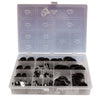
Selection boxes are an excellent choice - although you can buy Jubilee clips singularly, we would recommend buying a box of 10 or even investing in a Jubilee clip selection box so that you’ve got plenty of essentials on hand when you need them. Our wide range also includes a P clip selection box and an O clip selection box.
Choose high-quality products from reputable brands - the original Jubilee clip has been replicated many times, which means cheaper alternatives are available. However, choosing a cheaper version almost always guarantees a compromise on quality and performance. So, save yourself money and stress in the long run by only investing in the best of the best: genuine Jubilee clips.
Is a Jubilee clip alternative worth it?
Despite having been imitated countless times, the official Jubilee clip has never been bettered.
Zip ties and cable ties are often used in place of a Jubilee (or Jubilee-style) hose clip as a cheaper option. However, these are significantly less robust and far more basic in design and performance.
The same, more often than not, can be said for things like pipe clamps, ear clips, spring clips, V band clamps, and saddle clamps.
Alternatives just don’t pack the same mechanical punch when it comes to securing a hose pipe onto a solid fitting, which only leads to problems further down the line with the fixture and the appliance or system itself.
Frequently Asked Questions
What is a jubilee clip?
A jubilee clip is a worm drive hose clamp consisting of a circular metal band with a captive screw mechanism. Turning the screw draws the band tighter around a hose, compressing it against the fitting beneath to create a leak-proof seal. The Jubilee name is a registered trademark that has become a generic term in the UK for worm drive hose clips of any brand, in the same way that 'Hoover' describes vacuum cleaners regardless of manufacturer.
How are jubilee clips measured?
Jubilee clips are sized by the range of outside diameters they can clamp, expressed in millimetres. A clip labelled 20-32 mm can be tightened to fit any hose with an outside diameter between those two values. Measure the outside diameter of the hose once it has been fitted onto the spigot or pipe, then choose a clip whose range sits comfortably around your measurement. Avoid selecting a clip where your hose diameter falls at the extreme end of the range.
What is the difference between a jubilee clip and a hose clamp?
There is no functional difference. A hose clamp is the generic term for any device that secures a hose onto a fitting. A jubilee clip refers specifically to a worm drive hose clamp, which is one type of hose clamp. Other hose clamp types include T-bolt clamps, spring clamps, and ear clamps. In UK usage 'jubilee clip' and 'hose clip' are often used interchangeably to mean any worm drive clamp, whether or not it is made by the Jubilee brand.
What jubilee clip do I need for a garden hose?
A standard UK garden hose has an outside diameter of approximately 20-25 mm once fitted onto a tap connector. The most suitable jubilee clip sizes are 20-32 mm for standard hoses or 18-25 mm for slimmer lightweight hoses. For reinforced or thick-walled hoses, a 25-40 mm clip gives a better mid-range fit. Use a stainless steel clip for outdoor use where the clip will be exposed to rain or wet conditions.
What are the different types of jubilee clips?
The main types are: worm drive clips (standard, suitable for most domestic and automotive use), high-torque heavy duty clips (wider band for industrial and high-pressure applications), T-bolt clamps (hex-drive bolt for maximum clamping force), quick release clips (reusable swivel housing, suited to frequently-disconnected fittings), mini fuel clips (small bore fuel and oil lines), and multiband clips (continuous band cut to length for non-standard sizes).
How tight should a jubilee clip be?
Tighten until the hose is firmly compressed against the fitting and cannot be rotated or pulled off by hand, without distorting the hose material. Jubilee's published torque specification is 3.4-6.7 Nm depending on size, with a maximum of 4.5-9 Nm before risking thread or band damage. If the hose leaks, tighten incrementally rather than applying maximum torque in one turn.
Find the best Jubilee clips at The Hosemaster
We stock a whole host of different types of Jubilee clips here at The Hosemaster, including heavy-duty Jubilee clips, Jubilee clip selection boxes, and Jubilee Multibands.
We provide you with a diverse choice of clips made from stainless steel, mild steel, and plated steel, so you can be sure to find something that suits your requirements.
Browse our Jubilee clip range today, or call us on 01282 604 002 to discuss your requirements.
Shop Jubilee clips at The Hosemaster today
For more news, information, useful buying guides, and plenty of product advice, check out The Hosemaster blog…
Common Hose Problems and How to Avoid Them | How to measure a BSP Thread | Understanding the Role of Manifolds in Hose Systems


